La Repubblica: The final lesson from Babylon Berlin: “Democracy is fragile”
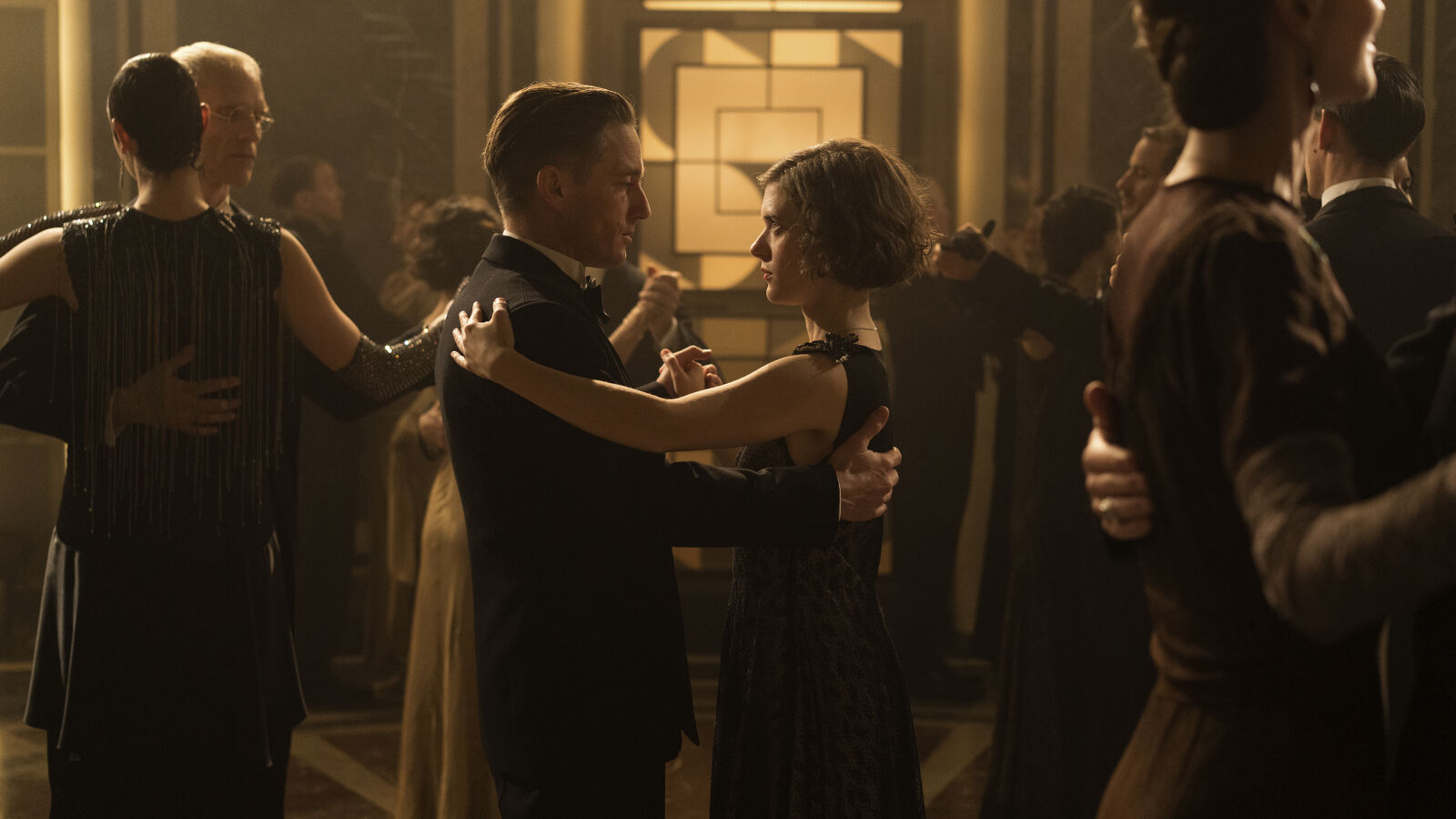
After 13 years, the series – which chronicled the Weimar Republic based on Volker Kutscher’s crime novels – comes to an end with its fifth season
ROME – Five weeks that would change the world. Five weeks when anything was still possible. The fifth season of Babylon Berlin, the hugely successful German hit series created by Tom Tykwer, Achim von Borries and Henk Handloegten, recounts precisely those five weeks in 1933 that lay between Field Marshal Hindenburg’s appointment of Adolf Hitler as the new Reich Chancellor and the elections on 5 March that handed absolute power to the National Socialist Party. After ten years and five series, the series that has chronicled the Weimar Republic – adapted from Volker Kutscher’s crime novels – is drawing to a close.
“When we started, 13 years ago, we were certain of one thing: we wouldn’t go beyond 30 January 1933, the day Hitler came to power,” Achim von Borries said from Berlin. “Now that we’ve reached the final season, we’ve realised that that date didn’t really mark the end. We realised that the five weeks that followed represent an incredible period, one that shows just how fragile democracies are in our societies, and how fragile our civilisation is when common sense fails us. What takes years to build can be destroyed in an instant.”
This new season – eight episodes, two a week from 10 November on Sky and Now – opens with a mysterious medical report concerning Hitler, drawn up by a doctor who treated him in 1918 at the Pasewalk military hospital, when the then private was admitted for suspected blindness caused by mustard gas. “Hitler was not yet the figure we all know today; at the time, he was just a deeply traumatised soldier in the First World War,” explains the screenwriter and director. “There is one detail, recounted by Hitler himself: in the final days of the war, he found himself blind – according to him, as a result of a gas attack. However, it is difficult to imagine how one could recover from blindness caused by toxic gases. He was diagnosed with ‘hysterical blindness’: a well-known phenomenon that occurs when a person, after witnessing unbearable horrors, suffers such trauma that they ‘shut down’. If you watch all five series, you realise that many of the characters portrayed – including the protagonist, his brother, and even their Armenian enemy – are, from the very beginning, men shattered by the First World War.”
The protagonist is still police inspector Gereon Rath, played by Volker Bruch, who mysteriously disappears at the start of the season. “For those living through a particular historical period, it is difficult to grasp the meaning of events as they unfold; the perspective changes radically when we look back on them nearly a hundred years later,” explains the actor who has played the role for ten years. “For me, history remains a great mystery; the more I learn, the less I understand it.”
According to von Borries, however, the contemporary account of what happened almost a hundred years ago can be of great use. “Today, looking back at those events, we can understand how a system can be destroyed in a very short space of time, but we can also learn how it is possible to put up resistance. There is a plot revolving around no fewer than 37 assassination attempts on Hitler; some are well-known facts, but one in particular could have completely changed the course of history. For this reason, right up until the very last moment of the final series, you can never be sure how it will end.” Whilst the inspector disappears without a trace, his partner Charlotte (Liv Lisa Fries) investigates a series of murders of war veterans; more and more clues emerge suggesting a direct link between these crimes, Gereon’s past and that of the new Reich Chancellor.
The series is considered one of the most expensive, if not the most expensive, on German television. “It turned out to be an immense freedom,” Volker Bruch said, “to have the time to prepare, with extraordinary sets and costumes…We never felt any pressure: the producers ensured it always remained an opportunity.” The series came to employ around 700 people; costume designer Jean Perel created 160 period costumes for a single sequence in this season set during the Cologne Carnival. “When you see that metronome in the opening credits, you realise you’ve spotted it somewhere else before. These are objects that don’t actually exist; they’re created specifically for the show,” the showrunner explained, “or take the bags: they make incredible ones that contain all sorts of things – bombs, dynamite, who knows what else – just as you’d expect from a terrorist’s luggage back then. They’re made of leather, masterfully reconstructed; every tiny detail is meticulously crafted. Having a substantial budget meant, above all, being able to work with the best professionals in their respective fields. Of course, if we compare our budget with that of other productions, such as The Crown, theirs was four or five times higher than ours. But when comparing ourselves to series of that calibre, we didn’t want to look out of place. It’s a massive undertaking.”
And now that, after 13 years of incredibly intense work, this journey is coming to an end, how does it feel? “It’s a farewell to the character for me just as much as it is for the audience,” Bruch said. “I hope they’ll have fond memories of him and, perhaps, that they’ll be able to forgive him for the times he was too intense, too authoritarian or impulsive.” “I’m almost relieved that it’s over,” the showrunner confessed, “that we’ve finally reached the iceberg – to draw a comparison with the film Titanic: everyone knows the story won’t have a happy ending, and yet… It’s a bit sad, but at the same time I’m also a bit happy. I’ll miss the characters; I’ll miss writing for Gereon, Charlotte and all the others. Although I can always reconnect with them by meeting the actors who played them.”