DWDL: World premiere in Cannes "Queen Silvia": Conventionally staged, royally played
By Thomas Lückerath, Cannes, 14 October 2026, 10:15 am
How much fiction can a love story take when its protagonists are still alive? One of the questions that makes “Queen Silvia” an exciting series project. The world premiere of the first episode in Cannes provided some initial answers: with a certain degree of creative freedom that nevertheless balances reality with respect for the prominent figures. There would be no other way: how else do you tell the love story of two people whom everyone believes they know, but whose decisive moments took place in private?
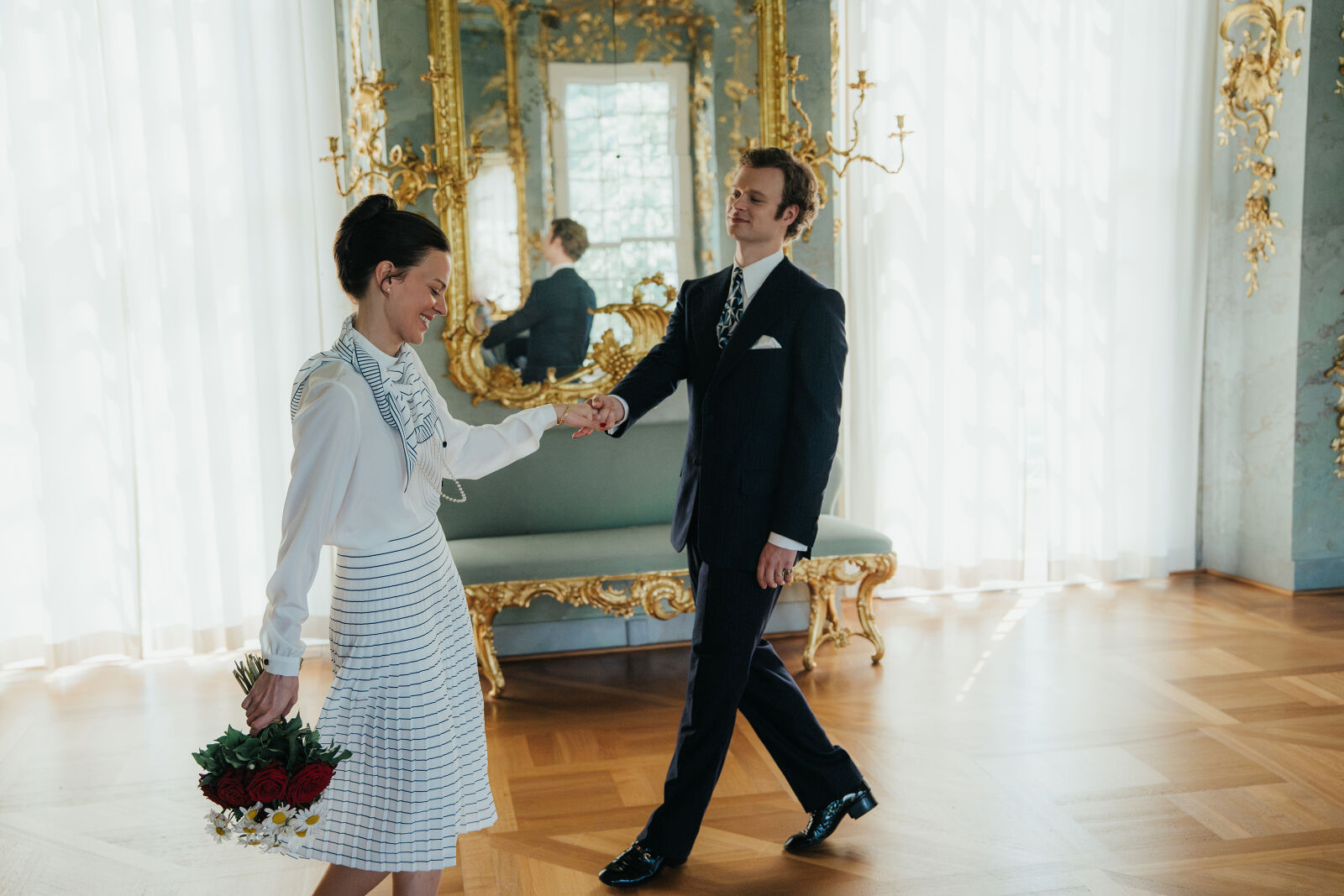
“Queen Silvia” is not “The Crown”, and does not want to be, as becomes clear during the Q&A following the world premiere at MIPCOM in Cannes. The story between Alicia von Rittberg (Silvia Sommerlath, later Queen Silvia) and Edvin Endre (Swedish Crown Prince Carl Gustaf, later King) is a love story, not a chronicle of a royal family. This is also because the German-Swedish co-production by ProSiebenSat.1 production subsidiary Pyjama Pictures and Swedish Beta subsidiary Unlimited Stories deliberately focuses on a comparatively short period: the first four years of the relationship, from their meeting at the 1972 Olympic Games in Munich to their official engagement interview.
In front of a packed Palais des Festivals, something not every premiere in Cannes has enjoyed in recent years, the premiere of the first episode impressed both MIPCOM’s industry audience and the French audience. This was evident not only from the applause, but also from the audible reactions to the humour and romance of the story, which is less a Cinderella fairy tale than a romantic drama, unfolding more credibly than sentimentally and drawing the audience in: with a young woman who embarks on an uncertain flirtation and a crown prince who knows that his private life will come to an end with the death of his grandfather.
“Queen Silvia” thus tells the drama of two different people on equal terms, rather than from the perspective of a commoner and a crown prince. The staging is certainly conventional. In this respect, it is difficult to attribute a particularly distinctive style to the series. The series is carried, and brilliantly so, by the chemistry between its two leads: congratulations are due for the casting of Alicia von Rittberg and Edvin Endre, and to the two actors themselves for their strength in carrying the series. These are two roles with a particular challenge: Queen Silvia and King Carl XVI Gustaf of Sweden are, after all, still alive. So perhaps there is a small parallel with “The Crown” after all.
At the world premiere, Alicia von Rittberg and Edvin Endre emphasised their personal research into the people behind the public roles, so as not to merely reproduce royal folklore. Von Rittberg said that she had looked closely at the role of women in the 1970s and had relied primarily on historical footage to develop a sense of Silvia’s manner and energy. Her co-star, meanwhile, deliberately did not want to portray Carl Gustaf as a carefree party prince, as he felt previous portrayals had often done.
(...)